The Language of Parkour
Vaults, precisions and balances, named and explained. Speed vault, precision, cat balance: a spectator's guide to the names of classic parkour movements and what judges look for in them.
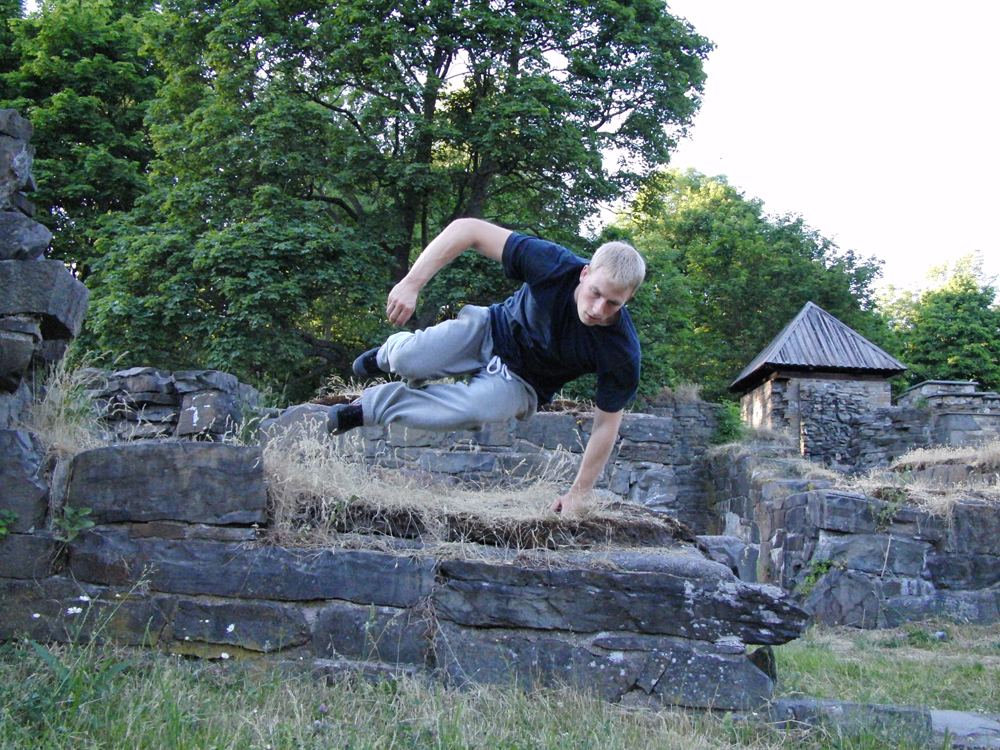
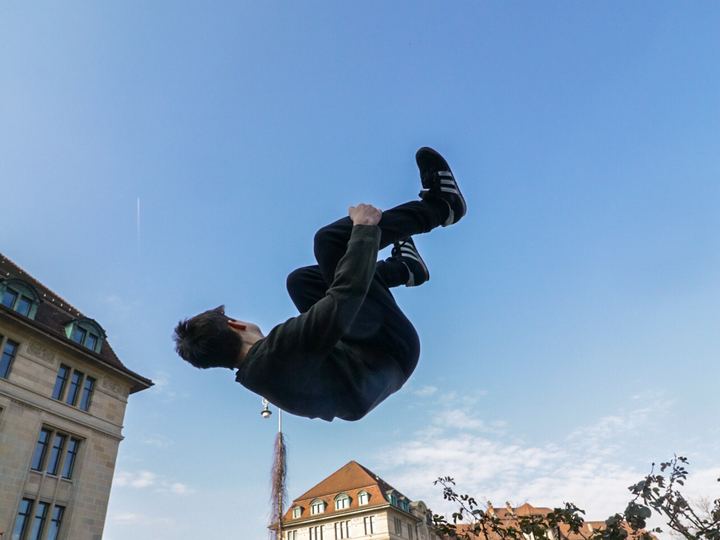
A speed vault: Danhje, Public domain
Why the names matter
Like dancers or skateboarders, parkour athletes share a vocabulary for the movements they use. Knowing a few of the names makes competitions and videos much more fun to follow, because you can see what an athlete chose to do and why it impressed the judges.
This page describes what the movements are, not how to do them. Each one is taught step by step by qualified coaches, usually on low, padded equipment.
Vaults
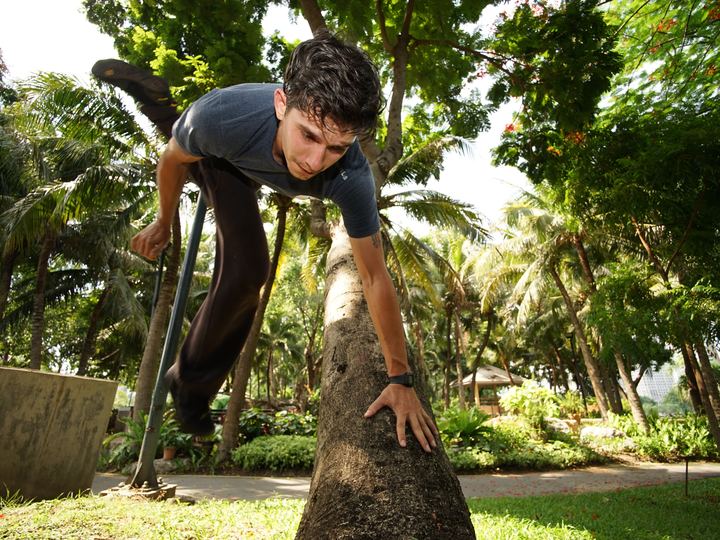
A vault is any way of passing over an obstacle with the help of the hands. Different vaults have different names. In a speed vault, the athlete clears a low wall almost sideways, touching it briefly with one hand, so very little speed is lost. Other vaults send the body straight over the top or through the gap between the arms.
Watch a speed run in competition and you will see athletes linking several vaults in a row, choosing the one that best suits each obstacle.
Precisions, balances and climbs
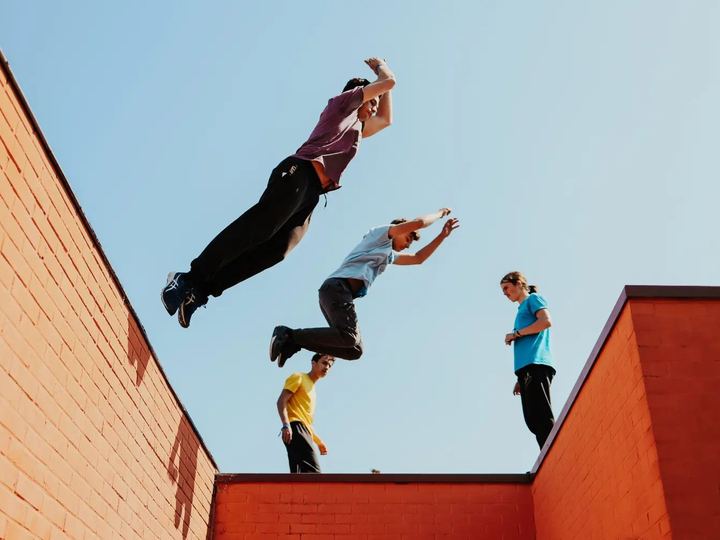
A precision is a jump that lands on an exact spot, such as the top of a narrow wall or rail. The skill is not the distance but the control, landing still without a wobble. A cat balance is a slow crawl on all fours along a rail or wall top, a test of patience and strength.
Wall runs and climb-ups turn tall walls into stairways. Rolls are used to spread the force of a landing across the body. Experienced athletes rehearse each of these hundreds of times at ground level before using them anywhere else.
What judges look for
In freestyle competition, judges reward difficulty, flow, creativity and execution. Clean landings and smooth transitions often impress more than a single huge jump. Control is the real measure of mastery.
Everything on this page is performed by trained professionals. Please do not try to copy it. If parkour inspires you, start at a proper parkour gym with qualified coaches.
Learning the words, not the risks
Many movement names come from French, because the discipline began in France, while others were coined by English-speaking communities online. Different countries sometimes use different names for the same thing, which is part of the fun of following an international sport.
If you want to try any of these movements yourself, the right place is a coached beginner class, where each one is broken into safe stages on low equipment.
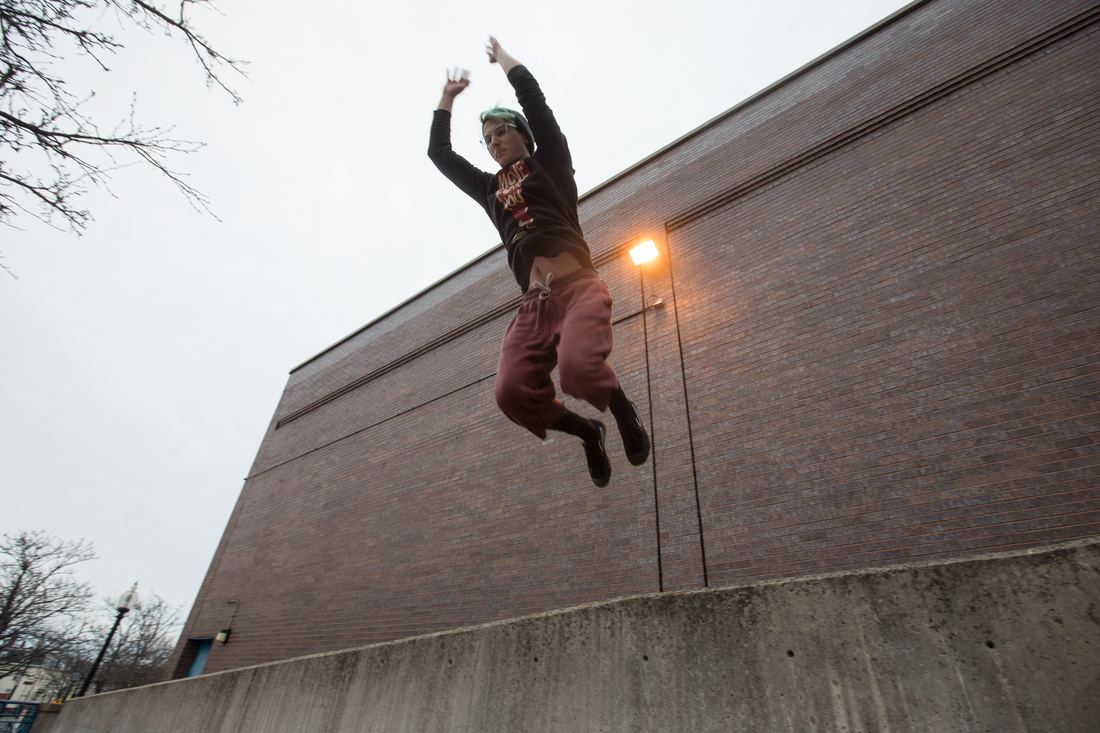
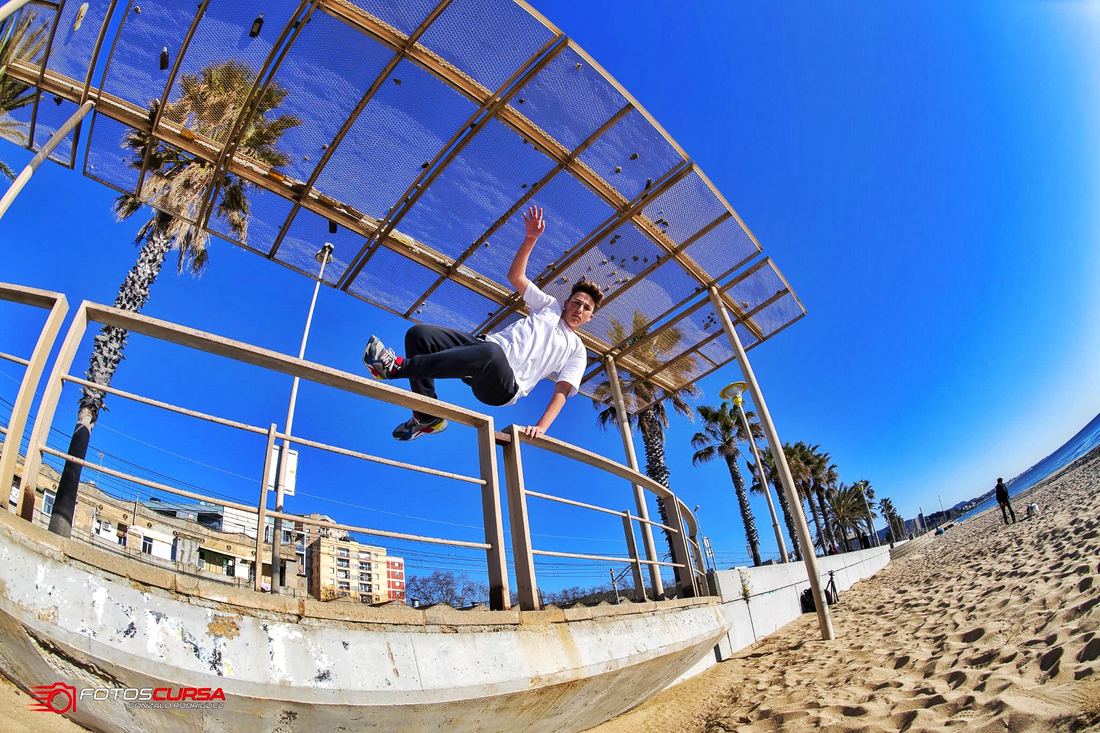
- A speed vault: Danhje, Public domain
- A precision landing: Ryan.pasco, CC0
- A vault on the seafront: Alec2992, CC BY-SA 4.0
Text written by Legendary Awesome.